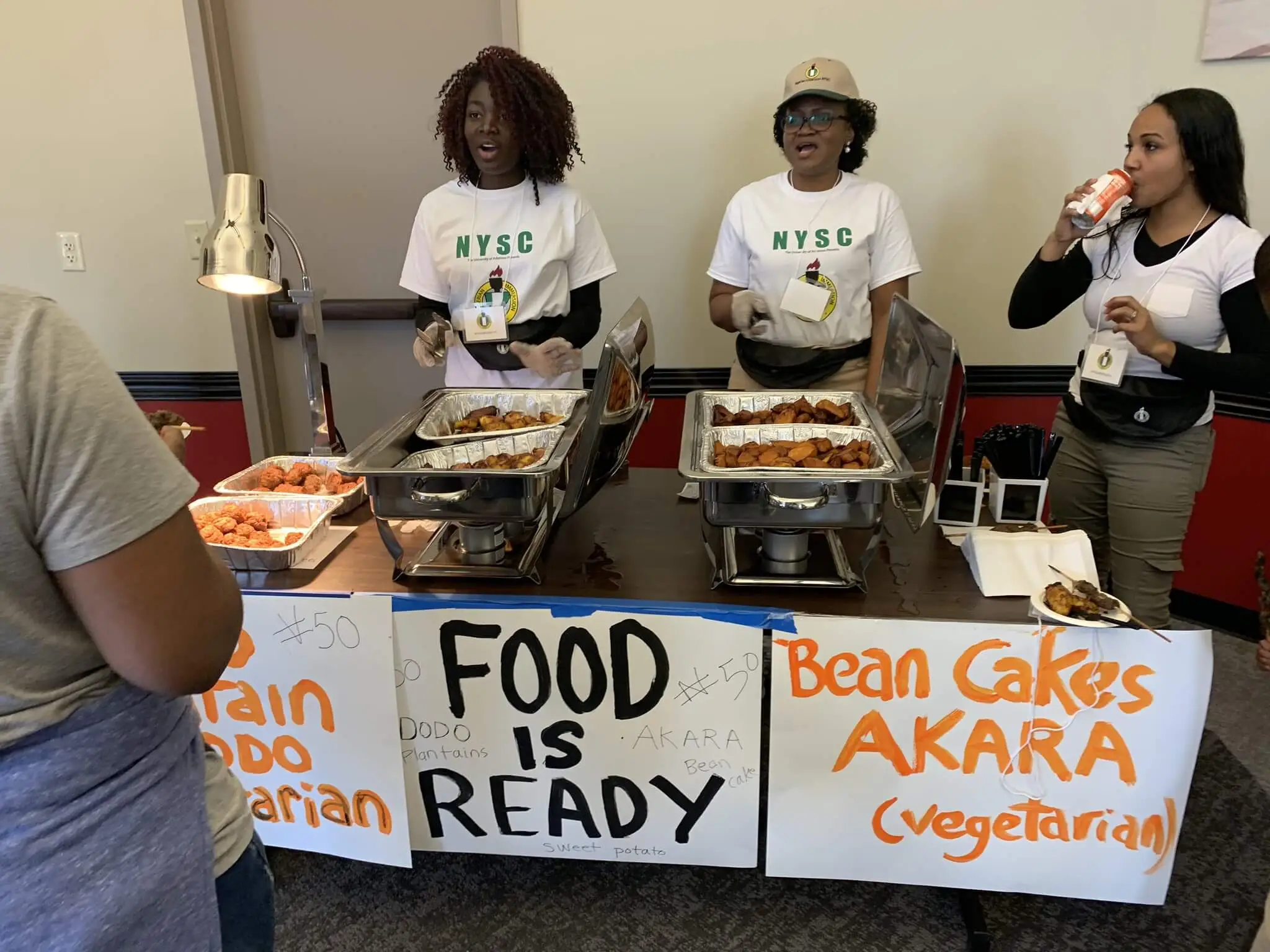

I’ve spoken to many corps members from different states and the reviews on camp food are almost the same. One corps member who served in Niger State told me she lost four kilogrammes in the first two weeks of camp not because she was exercising, but because she simply couldn’t bring herself to eat the food consistently. Another corps member from Benue State said the beans they served on his third day at NYSC camp was a experience he still haven’t fully recovered from. lol
But here’s the other side of the story, some corps members genuinely adapted, found the food acceptable, and even looked forward to certain meals. So what’s the truth about NYSC camp food? What should you actually expect? And more importantly is how do you make sure you’re eating well enough to survive three weeks of early morning drills, parade, lectures, and physical activity.
How NYSC Camp Feeding Works
The NYSC scheme provides three meals a day for corps members throughout the three week orientation camp. These meals are prepared in the camp kitchen and served in the camp dining hall and sometimes called the mess at designated times.
Feeding is technically free and included as part of your camp experience. You are not charged separately for meals. However, as many corps members quickly discover, free does not always mean satisfying.
The quality, quantity, and variety of camp meals is managed by contracted food vendors appointed by each state’s NYSC secretariat.
What You’ll Typically Be Served at NYSC Camp
Breakfast
Breakfast at most NYSC camps usually includes some combination of:
- Pap (akamu/ogi) which is sometimes thick, sometimes watery
- Bread which usually come in a small quantity per person
- Beans with either fried or plain boiled
- Tea or beverages like Milo, Bournvita, or plain tea in some camps
- Boiled eggs in some states, not all
- Fried plantain, which is occasionally and depends on the camp
The most common breakfast complaint from corps members is inconsistency. One morning you get a decent spread, the next morning it’s just pap and half a bread roll.
Lunch
Lunch is usually the most substantial meal of the day at camp. Typical options include:
- White rice and stew, the most commonly reported camp lunch across states
- Jollof rice on better days
- Eba or pounded yam with soup which varies by state and region
- Beans and rice combination
- Spaghetti or pasta in some camps
The portion sizes are frequently described as not enough for someone who just spent three hours on a parade ground. This is one of the most consistent complaints across batches and states.
Dinner
Dinner tends to be lighter than lunch and sometimes more unpredictable. Common dinner options include:
- Yam porridge
- Rice and beans
- Semovita or eba with soup
- Indomie noodles appears on the official camp menu in some states
- Leftover lunch items are reheated, this happens more than camp management would like to admit
The Honest Truth About NYSC Camp Food Quality
Let’s not sugarcoat it. The most common issues corps members report about camp food are:
- Portions are often too small for the physical demands of camp
- Poor hygiene in some camps where food that smells off, improperly covered serving containers, questionable kitchen conditions
- Limited variety as there is same meals rotating with very little creativity
- Long serving queues is another problem as by the time you reach the front, the food is cold
- Food may run out as corps members who arrive late to the dining hall sometimes find nothing left
That said, it would be unfair to say every camp is terrible. Several corps members particularly those who served in Lagos, Abuja, and Ogun State have described their camp feeding as actually not bad.
How to Supplement Your Camp Meals
This is the section that will genuinely save you during those three weeks. Smart corps members don’t rely solely on the official camp meals, they supplement strategically.
1. The Mammy Market
The mammy market is your best friend at camp. Almost every NYSC orientation camp has an internal market area where food vendors, shop owners, and traders set up stalls. Here you can buy:
- Cooked meals (rice, stew, pepper soup, suya, fried fish)
- Snacks (chin chin, biscuits, plantain chips, groundnuts)
- Beverages (soft drinks, bottled water, energy drinks, sachet juice)
- Instant noodles and canned goods
- Fresh fruits like bananas, oranges, watermelon
Plan to spend between ₦1,500 to ₦3,000 per day on mammy market food and snacks, depending on your appetite and the state. This is separate from any other camp expenses.
2. Eating With Your Platoon Group
One underrated survival strategy is coordinating with platoon members for group food purchases. A group of five or six corps members pooling money to buy a larger pot of food from a mammy market vendor is almost always cheaper per person than buying individual portions. Many camp friendships are formed over exactly this kind of arrangement.
3. Special Dietary Needs
If you have specific dietary requirements like whether religious (halal, no pork), medical (diabetic, hypertensive, allergic), or personal (vegetarian), camp food will likely not consistently accomodate you. Plan ahead:
- Inform the camp medical team of any food related medical conditions
- Identify vendors in the mammy market who can prepare meals to your specification
How Much Money Should You Budget for NYSC Camp Food?
Based on real accounts from corps members across multiple states and batches, here is a realistic food budget estimate for the three week camp period:
- Conservative budget: ₦15,000 – ₦20,000 (mammy market + extras)
- Moderate budget: ₦25,000 – ₦35,000
- Comfortable budget: ₦40,000 – ₦50,000
This is separate from other camp expenses like toiletries, uniform adjustments, and transportation. Plan accordingly and remember that your federal allawee will not be paid until after camp, so bring your camp money from home.
Conclusion
NYSC Camp food is one of those things that every corps member survives but surviving it is a lot easier when you go in prepared. The official meals will keep you going on most days, but they are rarely enough on their own given the physical demands of orientation camp. Smart supplementation and a friendly relationship with the mammy market vendors will carry you through the three weeks comfortably.
Don’t go to camp hungry and don’t leave your nutrition to chance. Your body is working hard during those three weeks.
What was your NYSC camp food experience like? Did you survive on the official meals or did you rely heavily on the mammy market? Drop your honest review in the comments below.